
Available today
Pick an item, open it right after payment
Kits, blind boxes, privileges, and limited-time content. Every item shows price, seats, and access period; after payment, pages and images open directly, other files download as ZIP.
Content is available now
10items live
-batch closes
10seats left
Need something else?
Tell us the one thing you want solved now
Describe the outcome and the blocker. Clear, deliverable requests can become kits, blind boxes, or private entries.

Kit
USD 8.21
2026 Xuanlin Method: Survival Order for Unstable Times
A practical 2026 field guide for turning unstable work, cash flow, family, health, and decisions into a clear operating order. Opens instantly as a complete HTML page after purchase.

Limited-time
USD 1.90
Digital Talisman Generator
Open the full talisman ritual after payment. Choose one intention, watch the ceremonial drawing sequence, then save a personal phone-wallpaper talisman as PNG.
Privilege
USD 17.99
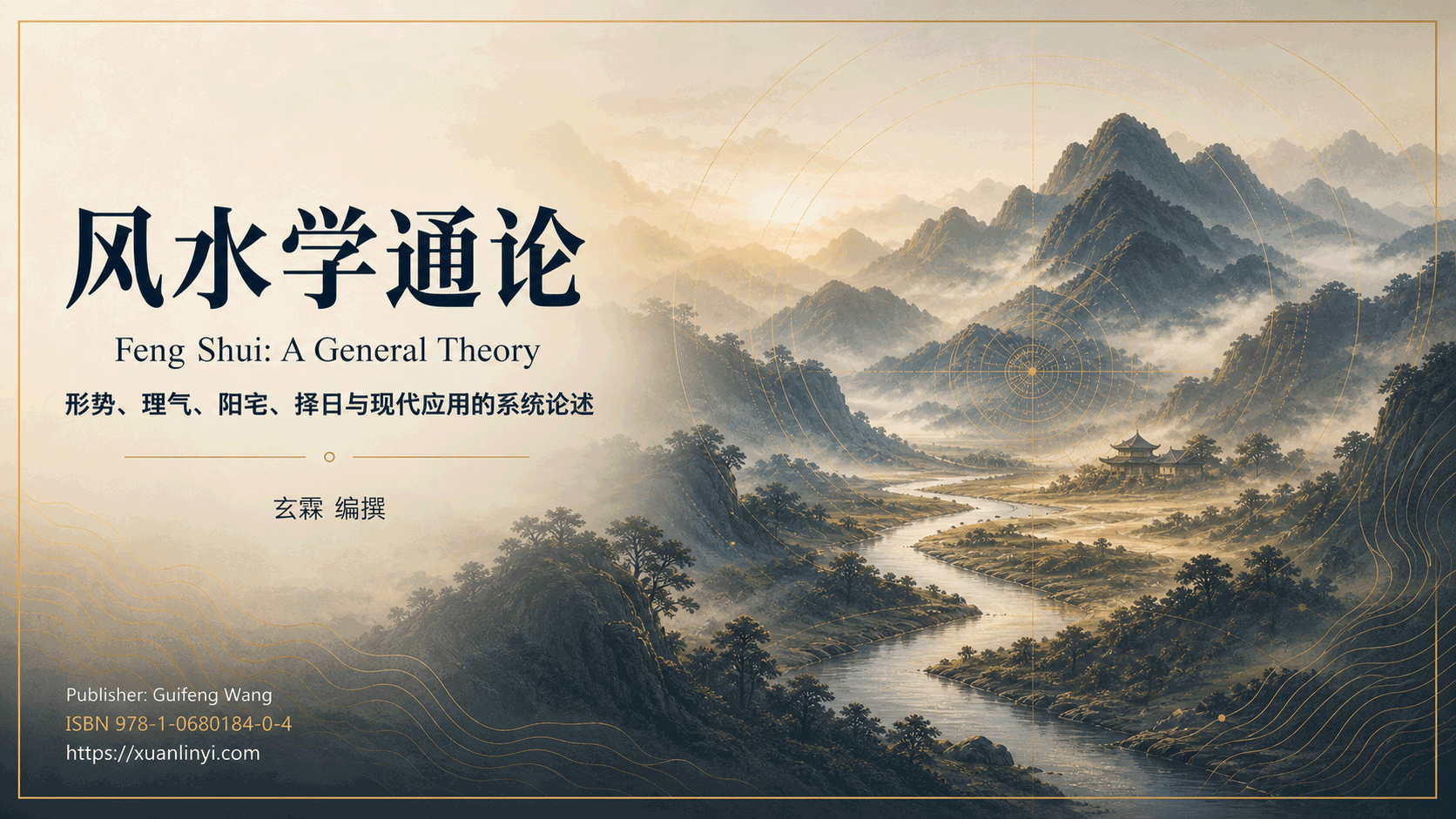
Feng Shui: A General Theory
Throughout this book, the terms “feng shui”, “kanyu”, and “dili” are used interchangeably. “Feng shui” is the name most familiar in everyday language. “Kanyu” is the more technical term traditionally used within the Chinese cosmological arts. “Dili”, widely found in classical writings, refers more broadly to the study of landforms and waterways, the siting and construction of dwellings and tombs, spatial orientation, and the movement and configuration of qi. In this book, the three terms do not denote separate disciplines. They are different names for the same body of knowledge, each shaped by its own historical and cultural context. The approach adopted here takes “xingshi”—the reading of spatial form and configuration—as its foundation; “liqi”—the cosmological analysis of orientation, timing, and qi—as its operative method; and human habitation as its ultimate concern. “Xingshi” encompasses the visible and tangible features of a place: mountains and waterways, the form of towns and cities, roads and entrances, “mingtang” or open gathering spaces, “shuikou” or points of passage and outflow, the scale and massing of buildings, and the organization of interior space. It is concerned not merely with the shape of individual objects, but with the larger spatial relationships they create—height and depth, enclosure and openness, approach and departure, concentration and dispersal. “Liqi” concerns the cosmological systems through which orientation, time, and environmental change are interpreted and calculated. These include yin and yang, the Five Phases, the Eight Trigrams, the “Hetu” and “Luoshu” diagrams, the Heavenly Stems and Earthly Branches, directional correspondences, the Three Cycles and Nine Periods, the movement of the Nine Stars, the matching of individuals and dwellings, and the selection of dates and seasons. The two are mutually dependent. Where physical features do not compose a coherent spatial configuration, “liqi” has no concrete setting in which to operate. Where orientation and timing are out of phase, even a favorable physical setting may not come into effect smoothly or consistently. “Xingshi” and “liqi” therefore enable one another while also setting limits on one another. This book does not treat mystery as a measure of intellectual value, nor does it regard wholesale rejection as a sign of clear thinking. The historical traditions of feng shui are too complex for either approach. They contain accumulated experience in habitation, terrain assessment, architectural ethics, and ecological adaptation. They also contain cosmological calculation, symbolic analogy, rivalry between schools, and the extravagant claims of popular practitioners. A general study of feng shui should preserve the internal structure of its ideas while remaining equally clear about their limits. Whenever questions of efficacy arise, this book explains how they are understood and assessed within traditional feng shui theory, without making absolute promises. The discussion draws on classical texts, commentaries, case studies, and modern scholarship relating to feng shui, “kanyu”, “dili”, Xuan Kong, San He, the Eight Mansions system, residential feng shui, the “luopan” compass, and traditional date selection. These materials are brought together within the broader framework of feng shui knowledge. Although the sources are wide-ranging, the purpose is not to substitute compilation for argument, but to clarify the tradition’s central concepts, theories, methods, and limitations. Any contemporary reconsideration of feng shui must take account of changes in urban density, housing design, transportation systems, property management, indoor technology, and family life. Earlier practitioners worked primarily with mountains, rivers, villages, and open landscapes. Today, many people live and work in high-rise apartments, elevator buildings, shopping centers, office towers, business parks, and dense road networks. The spatial principles have not disappeared, but the forms in which they appear have changed. Questions of height and depth, enclosure and openness, approach and departure, or gathering and dispersal can now be observed through pedestrian and vehicle movement, sightlines, daylight, ventilation, noise, drainage, fire safety, and privacy. What earlier texts described through the language of mountains and waterways may therefore reappear in modern settings as a complex relationship among buildings, infrastructure, environmental conditions, and patterns of human activity. For feng shui to remain genuinely useful, it should help people determine whether a place is stable, well lit, accessible, comfortable, and suitable for long-term living or productive work. At the same time, it must acknowledge the practical constraints imposed by structural conditions, building regulations, public safety, health, and individual ways of life. Traditional feng shui can still provide a meaningful way of reading the environments in which people live. Its continuing relevance, however, depends on translating principles once applied to mountains and waterways into the realities of everyday life, and on understanding the traditional language of good and bad fortune in terms of spatial order, temporal rhythm, and human physical and psychological experience. ISBN 978-1-0680184-0-4.
Privilege
USD 24.95
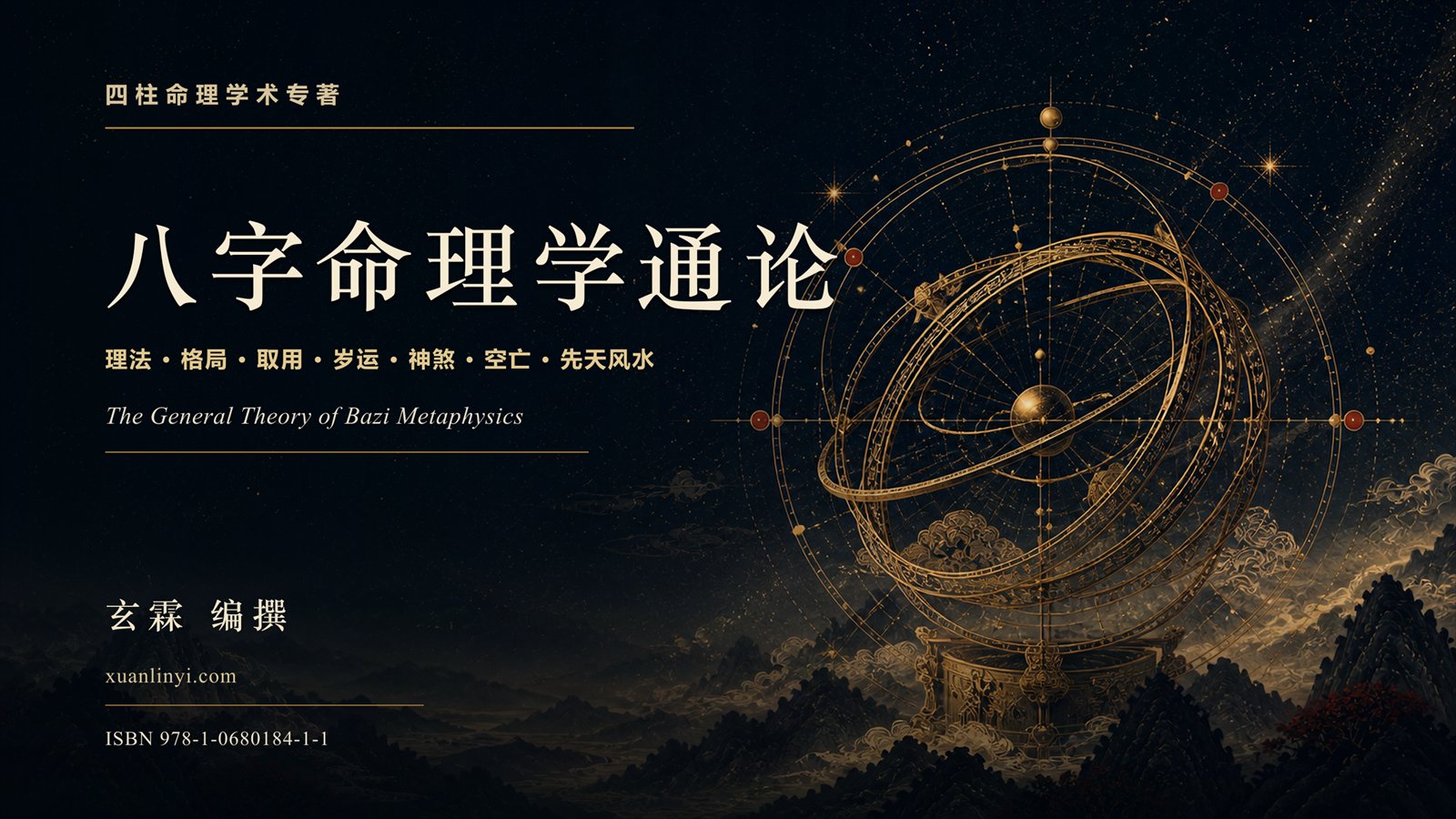
The General Theory of Bazi Metaphysics
The General Theory of Bazi Metaphysics by Xuanlin is a systematic 302-page study of Four Pillars (Bazi) foundations, interpretive sequence, and practical boundaries. Its six parts and forty-seven chapters move from chart construction and the Ten Gods to structures and useful elements, luck cycles, symbolic stars, void branches, life topics, innate feng shui, case studies, and modern reflection. What the book covers Foundations: yin and yang, the Five Phases, Heavenly Stems, Earthly Branches, Four Pillars chart construction, the Ten Gods, strength and weakness. Structures and useful elements: standard and transforming structures, useful elements, favorable and unfavorable factors, and worked examples. Timing: major luck cycles, annual influences, symbolic stars, void branches, and the limits of these traditional concepts. Life topics: family relationships, marriage, wealth, career, health, temperament, and appearance. Bazi and innate feng shui: a careful comparison of natal patterns, birth environment, and spatial symbolism. Cases and reflection: examples, classical sources, and modern discussion of responsible use. Study approach The book emphasizes verifying the chart first, reasoning from structure, and distinguishing core configuration from timing before discussing specific events. It preserves the internal logic of traditional methods while rejecting deterministic, fear-based, or absolute promises. It is an educational framework and does not replace professional medical, legal, financial, or other real-world advice. Publication details Format: PDF; 302 pages; First Edition, August 2026; ISBN 978-1-0680184-1-1.
Privilege
USD 34.99
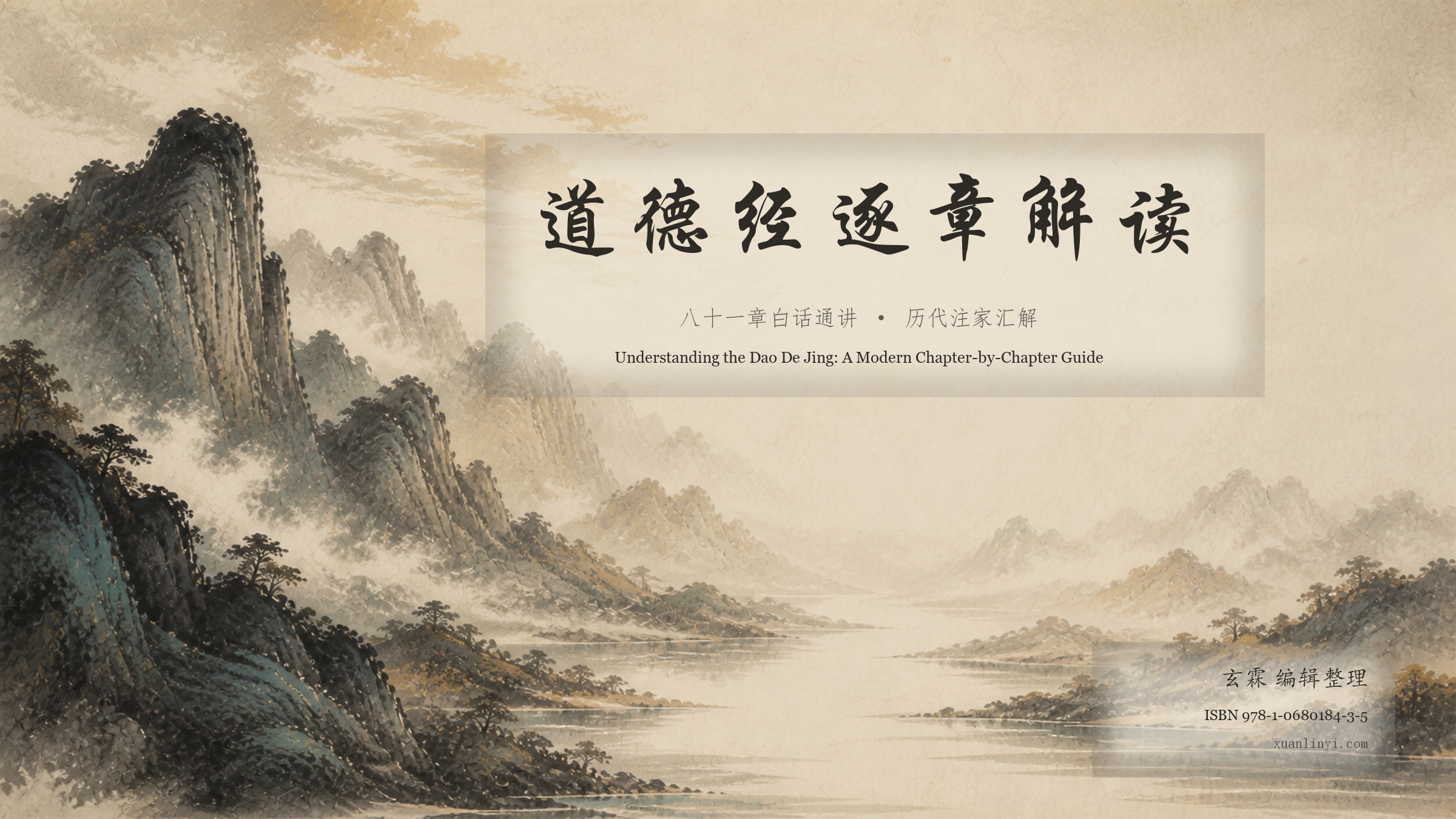
Understanding the Dao De Jing: A Modern Chapter-by-Chapter Guide
Understanding the Dao De Jing: A Modern Chapter-by-Chapter Guide, edited and compiled by Xuanlin, offers a complete contemporary reading of all eighty-one chapters. Across 756 pages, it begins with the classical text, draws on major traditional commentators, and connects each chapter with the choices, relationships, work, and uncertainties of modern life. Inside the Book Original text and clear explanation: Each chapter is presented in context and explained in accessible language. Classical commentaries: Selected insights from major premodern interpreters illuminate the range and depth of the tradition. Core ideas: The book traces themes such as Dao, virtue, non-action, softness, restraint, and knowing when to stop. Modern application: The chapters are connected with personal growth, family life, leadership, work, and social change. Historical perspective: Carefully checked examples clarify what the text can—and cannot—tell us today. Who It Is For Suitable for first-time readers as well as those who want to study the text chapter by chapter, compare traditional interpretations, or keep a substantial reference edition close at hand. Publication Details Digital PDF; 756 pages; first edition (August 2026); ISBN 978-1-0680184-3-5.
Privilege
USD 39.00
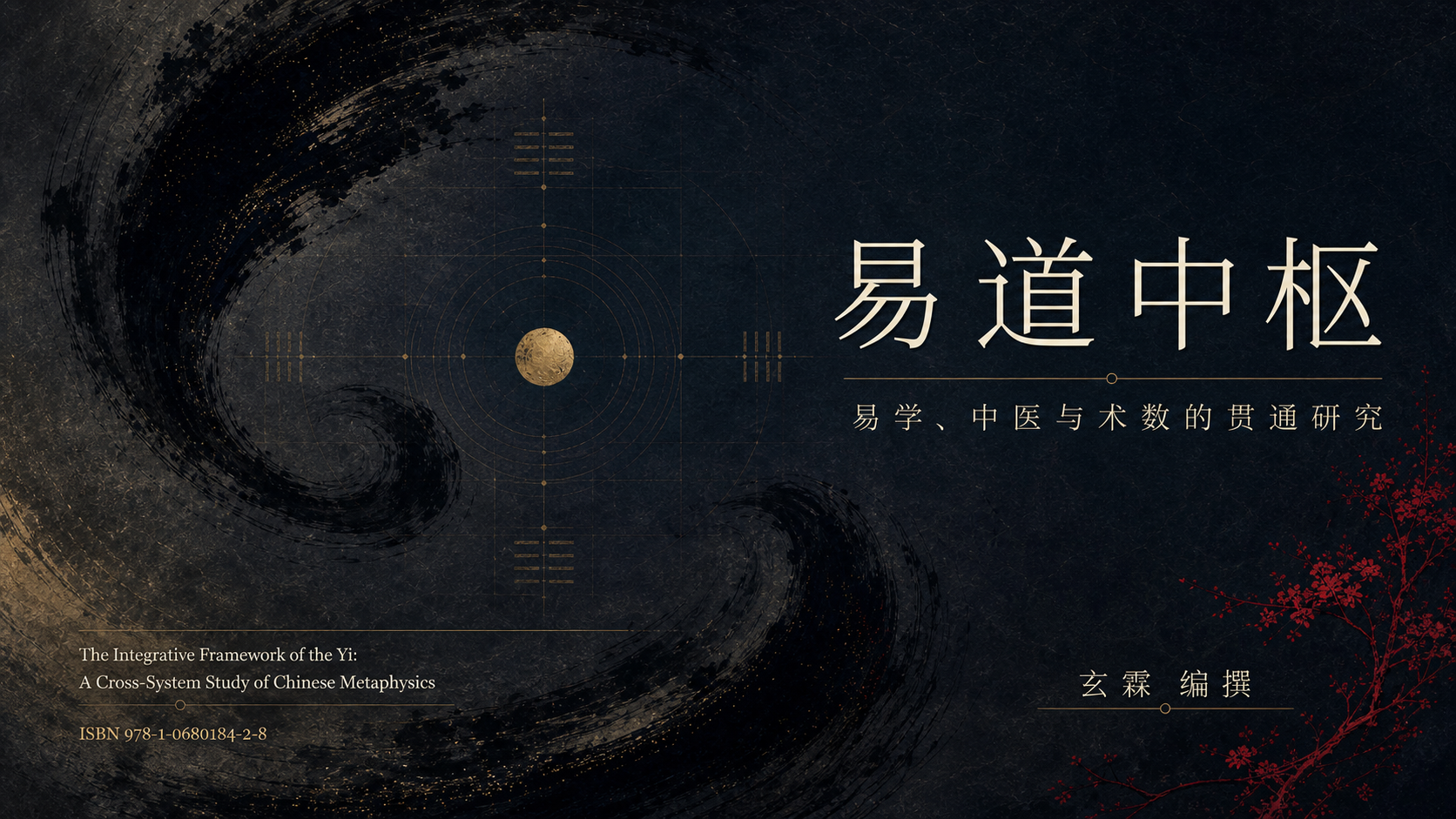
The Integrative Framework of the Yi: A Cross-System Study of Chinese Metaphysics
The Integrative Framework of the Yi: A Cross-System Study of Chinese Metaphysics, edited and compiled by Xuanlin, is a 472-page Chinese-language digital book that examines the shared structures behind the Yi tradition, Chinese medicine, and classical Chinese metaphysical arts. Beginning with yin and yang, the Five Phases, stems and branches, and the trigrams, the book moves into the foundations of Chinese medicine, acupuncture and formulas, Bazi, Liuyao, feng shui, physiognomy, and integrated case studies. Each field retains its own boundaries while being viewed through a common language of time, space, images, numbers, and transformation. Inside the Book Foundations of the Yi: Yin-yang, the Five Phases, stems and branches, trigrams, and their internal relationships. Chinese medicine: Organ systems, channels, constitution, acupuncture, and formulas as expressions of holistic thought. Metaphysical arts: The basic structures and practical reasoning of Bazi, Liuyao, feng shui, and physiognomy. Cross-system understanding: How different traditions observe time, space, the body, and human circumstances. Case-based learning: Concrete examples that show how theory becomes a disciplined process of interpretation. Who It Is For For general readers seeking a systematic introduction to traditional Chinese thought, as well as experienced students who want to connect ideas across the Yi tradition, Chinese medicine, and the metaphysical arts. It can be read from beginning to end or used as a long-term reference. Digital Edition PDF and EPUB; 472 pages; first edition, August 2026; ISBN 978-1-0680184-2-8. The main text is in Chinese. Medical material is provided for cultural and theoretical study and is not a substitute for professional diagnosis or treatment.
Privilege
USD 39.07
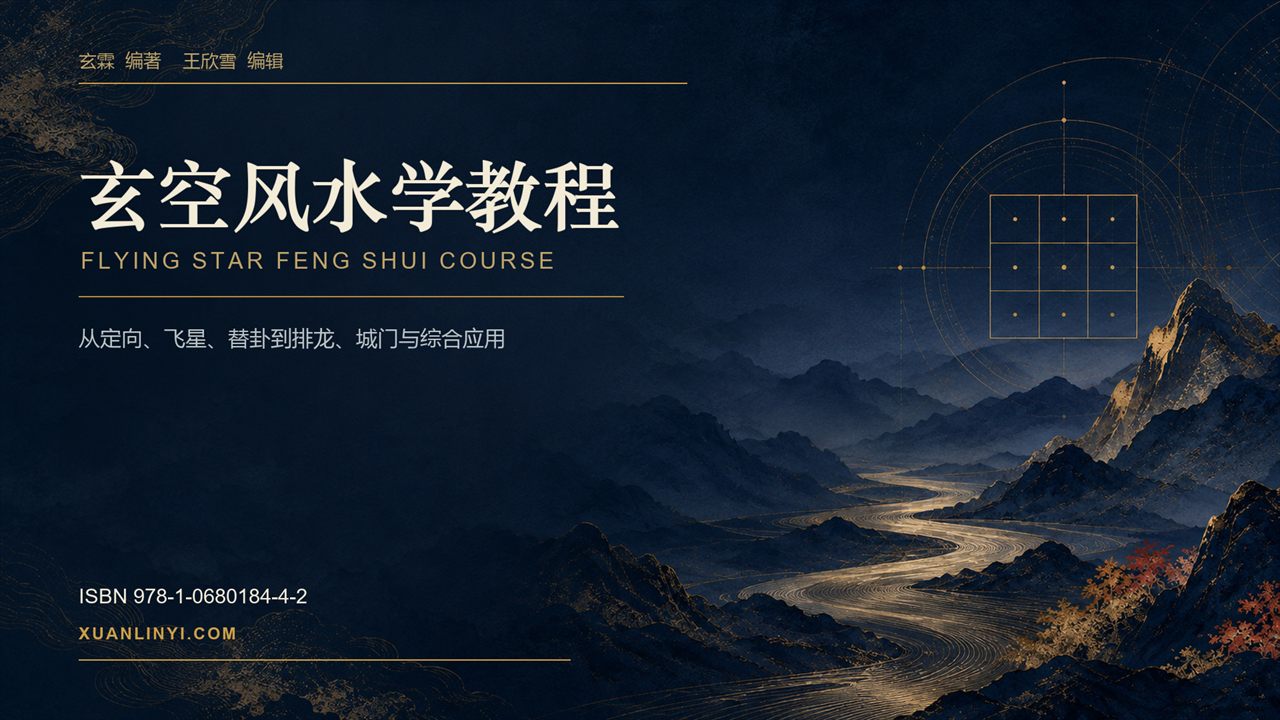
Flying Star Feng Shui Course (Chinese Edition)
Flying Star Feng Shui Course — 2026 Revised Chinese Edition is a systematic guide from field measurement to complete case analysis, designed for readers who want a clear learning path and a repeatable charting process. What the book covers Compass orientation, facing determination, and on-site measurement The three Flying Star charts, Replacement Stars, Pai Long, Cheng Men, and mountain-and-water analysis Integration of forms and formulas, pattern testing, and timing judgments Applications to modern homes and commercial spaces, plus complete report writing Edition details 139 pages with diagrams, recalculation steps, worked examples, and access to the companion online charting tool. Author: Xuan Lin ISBN 978-1-0680184-4-2
Privilege
USD 39.07
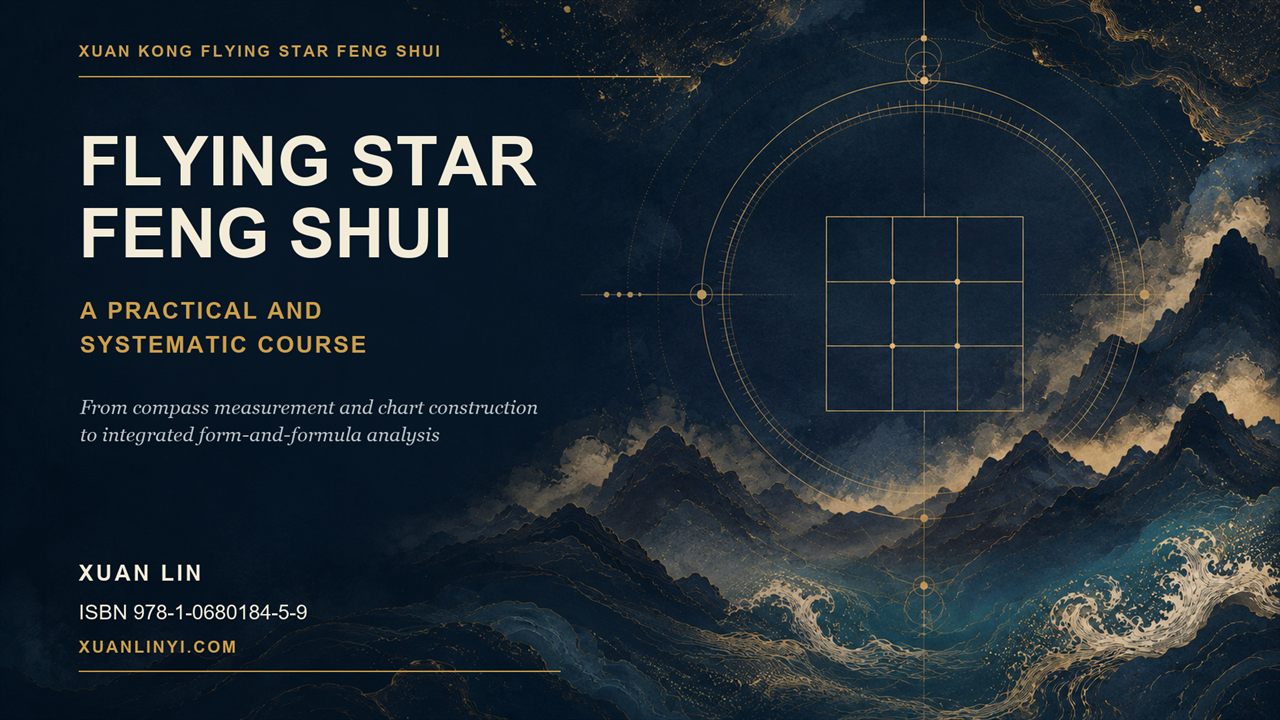
Flying Star Feng Shui: A Practical and Systematic Course
Flying Star Feng Shui: A Practical and Systematic Course — First English Edition, 2026 provides a structured path from compass measurement and chart construction to integrated form-and-formula analysis, modern applications, and complete written reports. What you will learn Compass measurement, facing determination, and the three Flying Star charts Replacement Stars, Pai Long, Cheng Men, and mountain-and-water analysis Pattern testing, timing judgments, and form-and-formula integration Applications to modern homes and commercial spaces, with a complete case report Edition details 162 pages with diagrams, recalculation steps, worked examples, and access to the companion online charting tool. Author: Xuan Lin ISBN 978-1-0680184-5-9
Privilege
USD 39.07
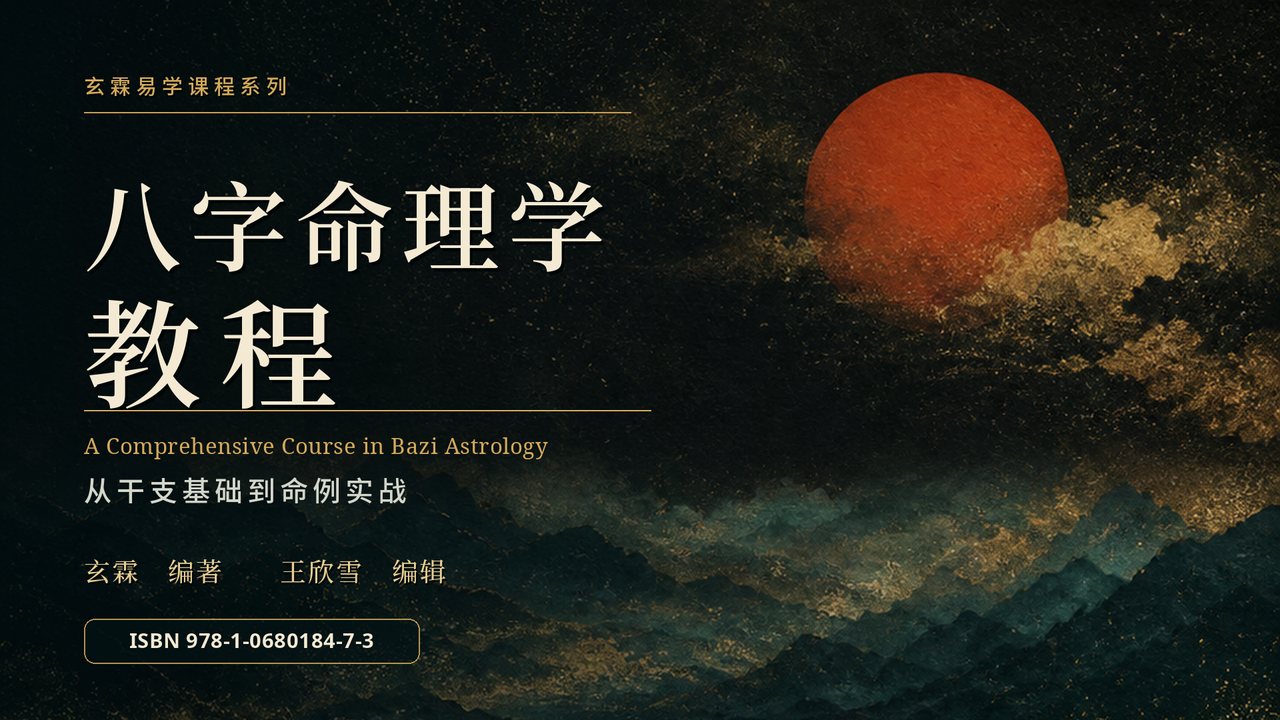
A Comprehensive Course in Bazi Astrology (Chinese Edition)
A Comprehensive Course in Bazi Astrology - 2026 Chinese Edition begins with Yin-Yang, the Five Phases, Heavenly Stems, Earthly Branches, and chart construction, then develops a systematic method for the Ten Relational Roles, strength, structural patterns, regulating factors, palaces, and timing. What the book covers Yin-Yang, the Five Phases, the Ten Stems, Twelve Branches, and the sexagenary cycle Four Pillars chart construction, local true solar time, Ten-Year Cycles, and Annual influences Ten Relational Roles, strength assessment, structural patterns, and regulating factors Work, resources, partnership, family, education, health symbolism, and other life topics Step-by-step teaching charts and complete case analysis Edition details 230 pages with diagrams, calendrical rules, verification steps, worked examples, and access to the companion online chart calculator. Author: Xuan Lin ISBN 978-1-0680184-7-3
Privilege
USD 39.07
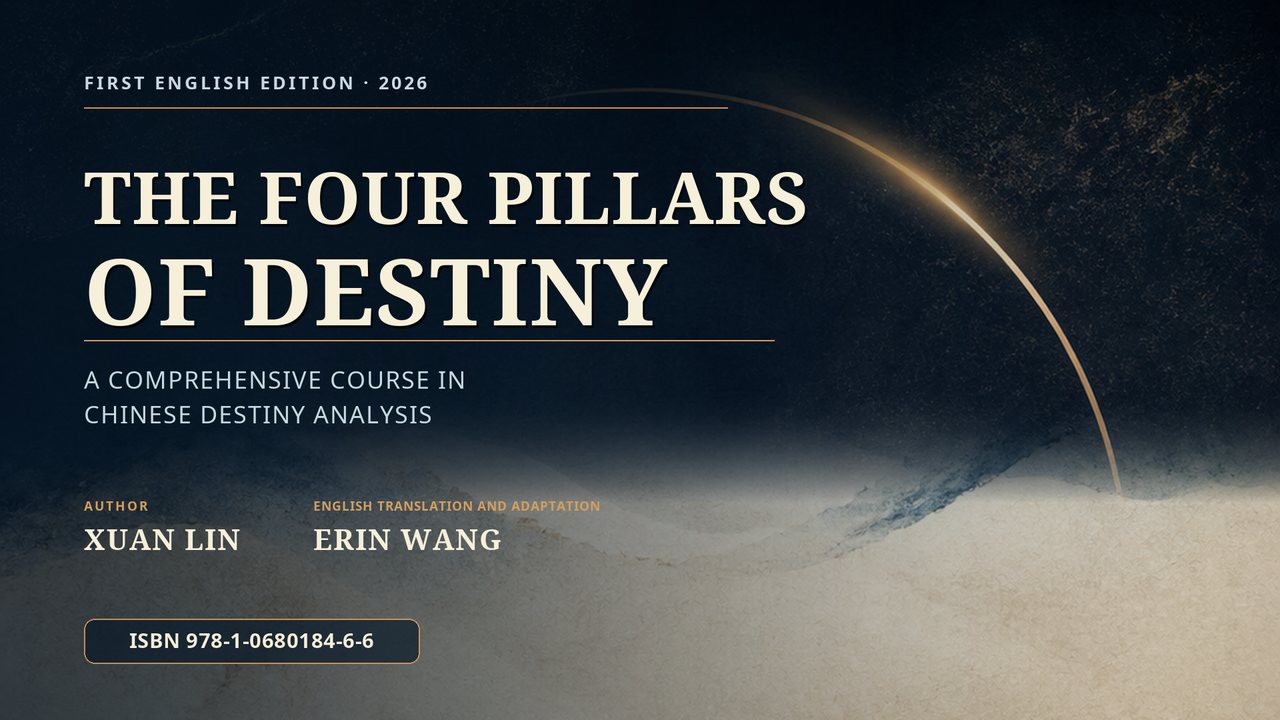
The Four Pillars of Destiny: A Comprehensive Course in Chinese Destiny Analysis
The Four Pillars of Destiny: A Comprehensive Course in Chinese Destiny Analysis - First English Edition, 2026 presents Bazi as a disciplined, relational method for studying structure, capacity, pressure, support, expression, and change through time. What you will learn Yin-Yang, the Five Phases, Heavenly Stems, Earthly Branches, hidden qi, and the sexagenary cycle Four Pillars chart construction, local true solar time, Ten Relational Roles, and Ten-Year and Annual influences Strength and condition, structural patterns, regulating factors, and interaction pathways Work, resources, partnership, family, health symbolism, learning, movement, and other life topics Integrated judgment through case studies, comparison, date selection, and glossary-supported terminology Edition details 258 pages with diagrams, reconstructable calendrical conventions, worked examples, and access to the companion online chart calculator. Author: Xuan Lin English Translation and Adaptation: Erin Wang ISBN 978-1-0680184-6-6